


Romance scams continue to cause serious financial and emotional harm in Australia.
More than $28.6 million in romance scam losses was reported to Scamwatch during 2025, affecting 1,330 Australians. More than 80% of the financial losses followed initial contact through online channels such as social media, dating platforms and online forums.
Romance scammers don’t always ask for money immediately.
They may spend weeks or months building trust, creating an emotional connection and learning about your circumstances before introducing an emergency, investment opportunity or another reason they need your help.
RSVP has been helping Australian singles connect since 1997, and recognising suspicious behaviour is an important part of dating online with confidence.
This guide covers 10 common romance scam warning signs, what to do when something doesn’t feel right and where Australians can turn for help if they believe they’re being targeted.
What Is a Romance Scam?
A romance scam occurs when somebody pretends to have romantic intentions to gain another person’s trust and then exploits that trust.
A scammer may be trying to obtain:
- Money.
- Cryptocurrency.
- Gift cards.
- Financial information.
- Personal information.
- Identity documents.
- Access to online accounts.
- Intimate images or videos.
- Assistance receiving or transferring money.
Romance scams can begin on dating platforms, social media, messaging services, online forums and other digital communities.
The relationship may appear completely genuine at first.
A scammer can spend weeks or months communicating regularly, remembering details about your life and developing an emotional connection before making a request.
That’s why recognising the pattern of behaviour matters more than looking for one obvious sign.

10 Warning Signs of a Romance Scam
No single behaviour automatically proves somebody is a scammer.
Someone may genuinely be travelling overseas. A person might dislike video calls. Another may have very little social media presence.
Look at the overall pattern.
Several warning signs appearing together deserve much greater caution.
Warning Sign 1: They Become Intensely Romantic Very Quickly
A new match becoming extremely affectionate almost immediately can be a warning sign, particularly when the intensity seems disproportionate to how well you actually know each other.
You might receive:
- Constant compliments.
- Messages throughout the day.
- Very early declarations of love.
- Statements that you’re “the one”.
- Talk about your future together before you’ve met.
- Pressure to treat the relationship as serious very quickly.
This behaviour is sometimes called love bombing.
Australia’s eSafety Commissioner identifies love bombing as a possible warning sign in online dating. It can involve excessive attention, affection or compliments that create an intense emotional bond very quickly.
Rapid feelings alone don’t prove somebody is dishonest. People develop connections at different speeds.
What deserves greater caution is intense affection combined with other behaviours such as secrecy, pressure, inconsistent stories or eventual requests for money.
What to Do
Slow the relationship down.
You might say:
“I’m enjoying getting to know you, but I’d prefer to take things slowly.”
Then pay attention to their response.
Someone genuinely interested in you should be able to respect a reasonable boundary.
Warning Sign 2: They Repeatedly Avoid Video Calls or Meeting You
Not everyone enjoys video calls.
Some people may have privacy concerns, anxiety, accessibility needs or simply feel uncomfortable on camera.
Declining one video call doesn’t prove anything.
The concern is a repeated pattern of avoiding both video calls and realistic opportunities to meet, especially when other parts of their story don’t add up.
You may hear explanations such as:
- Their camera is broken.
- Their internet connection doesn’t support video.
- They’re working somewhere remote.
- They’re temporarily overseas.
- Business travel keeps changing.
- An emergency occurs whenever you’ve arranged to meet.
eSafety identifies repeated excuses around video chatting or meeting as a potential warning sign of catfishing and romance scams.
What to Do
Don’t treat a video call as a test somebody has to pass.
Look at the broader behaviour.
If weeks or months pass and every realistic opportunity to confirm who the person is gets another excuse, consider slowing or ending the connection.
Warning Sign 3: Their Photos or Profile Don’t Add Up
Romance scammers may use stolen photographs or false identities.
Potential warning signs include:
- Very few photographs.
- Photos that appear unusually professional.
- Images that don’t appear to show the same person.
- Profile information that conflicts with what they tell you.
- Photos appearing elsewhere online under another name.
Consider a Reverse Image Search
If you’re concerned about a profile photograph, you can try a reverse image search.
If the same image appears under several different names or on unrelated profiles, that’s a significant reason for caution.
However, finding nothing doesn’t prove somebody is genuine.
A reverse image search is simply one piece of information.
What About RSVP Photo Verification?
RSVP’s Photo Verification uses a video selfie check to help confirm that a member is the person shown in their profile photograph.
Verification can provide an additional signal of authenticity.
However, it doesn’t guarantee somebody’s intentions or future behaviour.
Continue using normal dating precautions whether a profile is verified or not.
Warning Sign 4: Important Parts of Their Story Keep Changing
Everybody forgets small details occasionally.
What deserves attention is a repeated pattern of contradictions involving important aspects of somebody’s identity or life.
You may notice changes in what they tell you about:
- Where they live.
- Their occupation.
- Their age.
- Their family.
- Where they grew up.
- Their previous relationships.
- Their travel plans.
- Why they can’t meet.
- Their current circumstances.
You don’t need to interrogate somebody or deliberately try to catch them lying.
Simply pay attention.
If important details repeatedly don’t add up, don’t dismiss those inconsistencies simply because you’ve developed feelings for the person.
Warning Sign 5: They Are Always Overseas or Somehow Unable to Meet
Scammers may create circumstances that conveniently explain why an in-person meeting isn’t possible.
They might claim to:
- Work overseas.
- Travel constantly for business.
- Be completing a remote assignment.
- Live overseas but plan to move to Australia.
- Be Australian but temporarily abroad.
- Face repeated emergencies preventing travel.
Being overseas isn’t evidence of fraud.
Plenty of genuine people live, work and travel internationally.
The concern is the repeated pattern:
- Every meeting is postponed.
- Every video call fails.
- Every attempt to clarify their circumstances leads to another explanation.
Eventually, the distance may become part of a financial request. They might suddenly need money for flights, visas, medical treatment, customs charges or another expense before they can finally meet you.
Warning Sign 6: They Pressure You to Leave the Dating Platform Quickly
Someone eventually asking for your phone number isn’t automatically suspicious.
Many genuine connections naturally move to phone calls or another messaging service.
The warning sign is pressure to move immediately, particularly before you’ve established basic trust.
For example:
“I don’t like talking here. Give me your WhatsApp.”
Or:
“Let’s delete our profiles and talk privately.”
Australia’s eSafety Commissioner warns that moving quickly from a dating platform to another messaging or social media service can remove dating-platform safety features and potentially expose additional personal information, including your phone number, location and social network.
What to Do
Keep early conversations on RSVP while you’re getting to know someone.
You decide when you’re comfortable sharing other contact details.
If somebody repeatedly pushes against that decision, the pressure itself is useful information.
Warning Sign 7: They Ask for Money, Cryptocurrency, Gift Cards or Investments
This is one of the clearest financial warning signs.
Be extremely cautious if somebody you’ve met online asks for:
- Money.
- Cryptocurrency.
- Gift cards.
- Travel expenses.
- Medical expenses.
- Business funding.
- Emergency assistance.
- Money to pay taxes or fees.
- Money so they can finally meet you.
- Help receiving or transferring funds.
The request may not appear immediately.
Scammers can spend considerable time building trust before introducing a financial problem. Scamwatch says criminals may deliberately build relationships before shifting conversations towards money, gifts or personal information.
Watch for Investment and Cryptocurrency Scams
The financial request may also be presented as an opportunity rather than an emergency.
A romantic interest might tell you they’ve made substantial returns through:
- Cryptocurrency.
- Foreign exchange trading.
- An investment platform.
- A business opportunity.
- An “exclusive” investment scheme.
They may offer to teach you, introduce you to an investment expert or help set up an account.
Don’t allow romantic trust to substitute for independent judgement about an investment.
What to Do
Don’t send money, cryptocurrency or gift cards to somebody you only know through online dating.
Don’t receive or transfer money on their behalf either.
If you’ve already sent money, contact your Australian bank or payment provider promptly.
Warning Sign 8: They Ask for Sensitive Personal Information
Money isn’t the only valuable thing a scammer may want.
Personal information can potentially be used for identity theft, account access or further fraud.
Be cautious about requests for:
- Bank account information.
- Credit or debit card details.
- Medicare details.
- Driver licence information.
- Passport copies.
- myGov login information.
- Passwords.
- Verification codes.
- Security-question answers.
- Financial statements.
- Superannuation information.
- Other identity documents.
Cyber.gov.au notes that romance scams can involve attempts to gain access to money, bank accounts, credit cards, passports, email accounts or identification information.
Honesty Doesn’t Mean Giving Up Your Privacy
Getting to know somebody involves gradually sharing information.
It doesn’t require giving them access to sensitive personal or financial details.
Trust can develop without giving somebody information that could compromise your identity or accounts.
Warning Sign 9: Their Online Identity Feels Newly Created or Inconsistent
A very limited or unusual online presence can sometimes add to other concerns.
You might notice:
- Recently created social media accounts.
- Very few posts.
- Most photographs uploaded around the same time.
- Little interaction with other people.
- Information conflicting with their dating profile.
- Different names being used elsewhere.
But keep this in perspective.
Some genuine people barely use social media.
Others deliberately keep their accounts private.
A limited social media presence alone isn’t proof that somebody is fake.
Consider it alongside everything else you know.
Warning Sign 10: They Don’t Want You Talking About the Relationship
Be cautious if somebody discourages you from discussing the relationship with people you trust.
They might say:
- “They won’t understand what we have.”
- “Your family will try to ruin this.”
- “This should stay between us.”
Isolation can make manipulation easier.
Scamwatch encourages Australians to talk with family and friends about scam tactics, particularly when something about an online relationship raises concerns.
Ask Someone You Trust for Another Perspective
If you’re uncertain about an online relationship, speak with someone who isn’t emotionally involved.
That could be:
- A close friend.
- A sibling.
- An adult child.
- Another trusted family member.
They may notice contradictions, pressure or unusual requests that are harder to recognise when you’re emotionally invested.
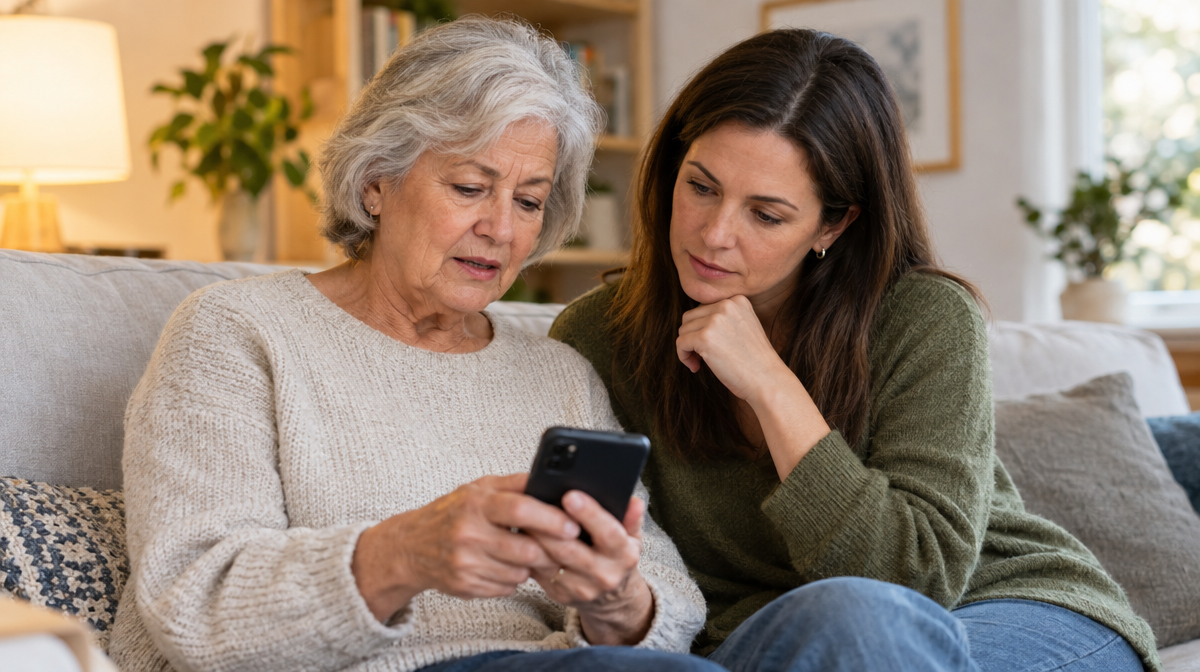
A Quick Romance Scam Red Flag Checklist
Slow down and take another look at the situation if several of these are happening together:
- The relationship becomes intensely romantic almost immediately.
- They repeatedly avoid meeting or video calls.
- Their photos or profile don’t add up.
- Important parts of their story keep changing.
- They’re constantly overseas or unavailable.
- They pressure you to leave the dating platform quickly.
- They ask for money, gift cards or cryptocurrency.
- They introduce an investment opportunity.
- They request banking or identity information.
- They ask you to receive or transfer money.
- They want the relationship kept secret.
- They become angry when you question a request.
- They pressure you to prove your feelings through money, information or intimate content.
One unusual detail isn’t necessarily proof of a scam.
A pattern is what matters.
What Genuine Early Dating Behaviour Can Look Like
Knowing the warning signs doesn’t mean treating every new match with suspicion.
Healthy early dating often leaves room for trust to develop gradually.
More reassuring behaviour can include someone who:
- Gives reasonably consistent information about themselves.
- Respects your preferred pace.
- Doesn’t pressure you for contact details.
- Accepts your boundaries.
- Doesn’t ask for financial assistance.
- Is willing to meet safely when both people are comfortable.
- Doesn’t try to separate you from friends or family.
- Doesn’t require secrecy.
- Allows the relationship to develop without demanding immediate commitment.
None of these behaviours guarantees somebody is genuine.
They’re simply more consistent with a connection that is developing naturally rather than through pressure.

What to Do If You Think You’re Being Scammed
If several warning signs appear or somebody asks you for money, don’t continue simply because you’ve already invested weeks or months in the relationship.
1. Stop Sending Money
Don’t send additional money because there’s another emergency or because somebody promises you’ll be repaid.
If you’ve already transferred funds, contact your bank or payment provider immediately.
They may be able to stop or recover money depending on the circumstances, although recovery isn’t guaranteed.
2. Stop Sharing Personal Information
Don’t provide additional:
- Banking information.
- Passwords.
- Identity documents.
- Account details.
- Verification codes.
- Intimate images.
- Financial records.
If you’ve shared account credentials, change affected passwords and review your account security.
3. Keep Relevant Evidence
Where it’s safe to do so, retain:
- Messages.
- Profile details.
- Screenshots.
- Email addresses.
- Phone numbers.
- Payment records.
- Cryptocurrency wallet details.
- Receipts.
This information may assist the platform, your bank or relevant authorities.
4. Report the Profile to RSVP
If the person is an RSVP member, use the platform’s reporting tools.
Blocking the member can also prevent further direct communication through the platform.
5. Report the Scam to Scamwatch
Australians can report suspected scams to Scamwatch, which is operated by the National Anti-Scam Centre.
Reports help build intelligence about current scam activity and tactics.
6. Use ReportCyber Where Appropriate
If the situation involves cybercrime, online fraud or compromised accounts, Australia’s ReportCyber service provides a channel for reporting cybercrime.
7. Seek Identity Support if Personal Documents Were Shared
If you’ve shared identity documents or information that could be used for identity theft, IDCARE provides specialist identity and cyber support in Australia.
8. Talk to Someone You Trust
Romance scammers deliberately create emotional trust.
That can make ending communication much harder than it may appear to somebody outside the situation.
Tell somebody you trust what has happened.
Another person can help you look at the situation more objectively and work through practical next steps.
What If Intimate Images Are Being Used to Blackmail You?
Romance scams aren’t limited to financial requests.
Someone may encourage you to send an intimate image or participate in a sexual video call and later threaten to distribute the content unless you pay money or comply with further demands.
This is sexual extortion, often called sextortion.
Australia’s eSafety Commissioner warns that dating apps and social media can be used to obtain intimate material for blackmail. eSafety advises against paying a blackmailer and provides assistance for image-based abuse and sexual extortion.
If this happens:
- Stop communicating with the person.
- Don’t send additional intimate material.
- Don’t pay them.
- Keep relevant evidence where safe.
- Report the account to the platform.
- Seek assistance through Australia’s eSafety Commissioner.
If you’re threatened or believe you’re in immediate danger in Australia, call Triple Zero (000).
Frequently Asked Questions
How Do Romance Scams Usually Start?
They can begin with an ordinary interaction on a dating platform, social media site, online forum or another digital community.
A scammer might compliment your profile, send a friendly message or begin talking about a shared interest.
The financial request may not appear until much later.
Are Older Australians More Likely to Be Targeted?
Romance scams can affect people of any age.
Rather than assuming there’s one typical target, it’s more useful to recognise the tactics scammers use.
People returning to online dating after many years may simply be less familiar with some modern scam techniques, which makes knowing the warning signs particularly useful.
Can I Recover Money Lost to a Romance Scam?
Sometimes money may be recoverable, but there is no guarantee.
Contact your bank or payment provider as soon as you realise something may be wrong.
Be cautious if somebody later contacts you claiming they can guarantee recovery of your lost money in exchange for another payment. People who have already experienced scams can be targeted again through recovery scams.
Are Romance Scams Only Found on Dating Platforms?
No.
Scammers can make contact through dating platforms, social media, messaging services, online forums and other digital communities.
Scamwatch reported that online channels accounted for more than 80% of reported financial losses from romance scams in Australia during 2025.
Should I Leave RSVP to Talk to Someone on WhatsApp or Another App?
You can choose how you communicate once you’re comfortable.
There is no need to move away from RSVP immediately.
Be cautious if somebody repeatedly pressures you to move to another service despite your preference to continue communicating on the dating platform.
Does an RSVP Verification Badge Mean Someone Is Definitely Genuine?
Photo Verification can help confirm that a member is the person shown in their profile photograph.
It shouldn’t be treated as a guarantee of their behaviour or intentions.
Continue paying attention to inconsistencies, financial requests, pressure and respect for your boundaries.
What Should I Do if Someone I’ve Never Met Asks Me for Money?
Don’t send money, cryptocurrency or gift cards, and don’t transfer or receive funds on their behalf.
If you’ve already sent money, contact your bank or payment provider promptly and consider reporting the situation to RSVP and Scamwatch.
Should I Confront Someone I Think Is a Scammer?
You don’t need to prove to somebody that you’ve identified them as a scammer.
Prioritise protecting your money, personal information and accounts.
Stop sending money or information, retain useful evidence where safe and report the account through appropriate channels.
If threats, blackmail or coercive behaviour are involved, prioritise your safety rather than confronting the person.
Trust Should Develop Over Time
Knowing about romance scams isn’t about assuming every new person you meet online is dishonest.
It’s about recognising that trust doesn’t need to be rushed.
Take your time.
Keep early conversations on RSVP while you’re getting to know somebody.
Protect sensitive personal and financial information.
Pay attention when stories repeatedly don’t add up.
Be cautious when someone creates intense emotional pressure before you’ve properly established who they are.
And never allow a romantic connection to rush you into sending money, moving funds or making an investment.
If something feels wrong, slow down and talk to somebody you trust.
RSVP provides Photo Verification, reporting and blocking tools to support members while they’re meeting people online, but your own boundaries and judgement remain important.
If you’re meeting people through RSVP, review the Dating Safety Tips before starting a new connection and report profiles or behaviour that make you feel unsafe or suspicious.
Leave a Reply